
Beyond the shared Cup
Why a Mexican has a stake in the 4 of July

Today we were invited to celebrate the Fourth of July with a Mexican American family very close to us, in their home.
For some of my compatriots, the honest first reaction to that might be skepticism, or at least a polite distance. Our relationship with the country to our north has long been defined by friction, by the border, and by a fierce protection of who we are.
But if we set the political noise aside, there is an uncomfortable truth we should stop pretending around. Mexico and the United States share a single nervous system, cultural and structural, and right now that system is under real strain.
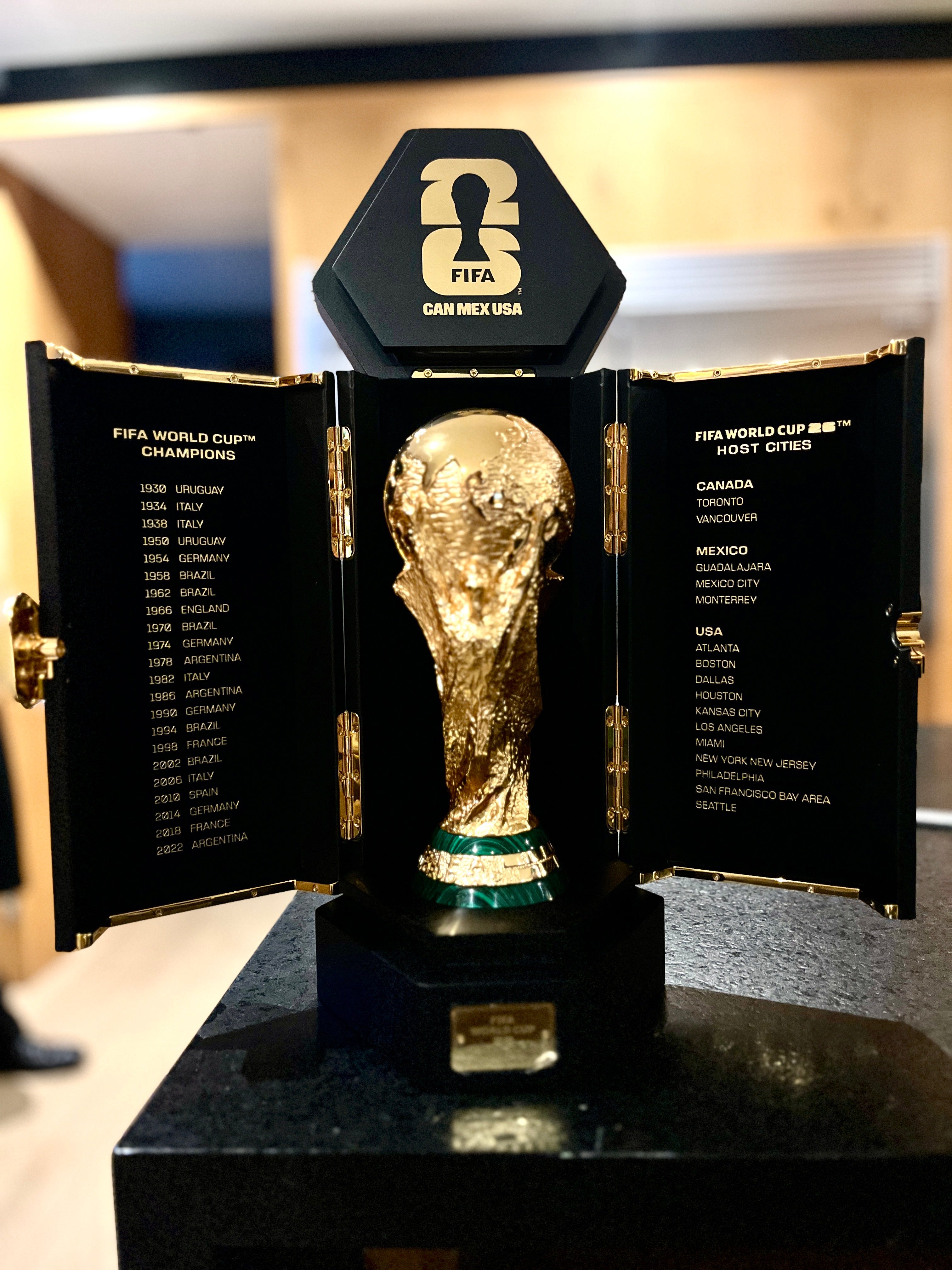
Look at the television this week. We are in the middle of the 2026 World Cup, hosted jointly by Mexico, the United States, and Canada. For the first time the tournament does not belong to one country. It belongs to a continent.
This is not only about football. It is our shared reality made visible. We are no longer neighbors watching each other over a fence. We are on the same field.
But we like to think we are entirely separate. Then look at what actually shapes the modern Mexican mind. Which authors sit on our nightstands. Which podcasts play on the commute. Who our mentors are, the founders, the voices we quote back to each other.
For most educated Mexicans today, those references run straight into the American ecosystem. We consume its media, borrow its institutional frameworks, and copy its models of innovation. To enjoy the fruits of that exchange while pretending we have no stake in America’s health is simply dishonest.
And our stake is not only in their celebrity culture. We are invested in that too, deeply, the same names, the same shows, the same feeds. But we are just as invested in their intellectual and artistic culture, the art institutions and the ideas. And that exchange runs in both directions.
The Metropolitan Museum of Art, the largest art institution in the United States, chose a Mexican architect, Frida Escobedo, to design its new wing for modern and contemporary art. Its facade will be a celosía, a lattice screen drawn straight from Mexican building tradition, set into the face of America’s grandest museum. That is not plain capitalism, that is shared authorship.
Whether we admit it or not, our consciousness is already intertwined.
It is evident that the old “American standard” is fracturing. Its politics are gridlocked, its social contracts are burning, its position in the world is shifting. But the deepest fracture is not structural. It is in its values.
These words and thoughts reached me the way the best ones usually do, in the silence of my early morning meditation. The credit goes to Bob Roth who shared Thomas Jefferson’s quote, carved today into the wall of his memorial in Washington:
“I am not an advocate for frequent changes in laws and constitutions. But laws and institutions must go hand in hand with the progress of the human mind. As that becomes more developed, more enlightened, as new discoveries are made, new truths discovered and manners and opinions change, with the change of circumstances, institutions must advance also to keep pace with the times. We might as well require a man to wear still the coat which fitted him when a boy as civilized society to remain ever under the regimen of their barbarous ancestors.“
Thomas Jefferson, Jefferson Memorial.
TJ is describing growth: A boy becomes a man, a society becomes more enlightened, and the old coat no longer fits because the body underneath it has matured.
But the key word is “enlightened”.
That is not what we are watching now. The way the United States is treating its own people, and much of the world, is not the expansion of conscience Jefferson had in mind. It is a contraction of it. The decay of the American standard is, before anything else, a decay in its values. A society shrinking in conscience does not simply need a larger coat. It needs to remember what the coat was for.
Here is what we as Mexicans have to understand. If that coat tears all the way through, we do not simply stand across the river and watch. We catch the cold too.
Our economy, our security, our own creative future are anchored to the stability of North America as a whole. The decline of the American standard is not a Mexican victory. It is a threat to us.
So why should a Mexican celebrate the Fourth of July?
Not to worship a foreign power, and not to praise its past without question. We celebrate it to recognize that the ideals underneath it, progress, liberty, empathy, a human mind that keeps expanding, do not belong to one country. They belong to all of us.
We celebrate it because for Mexico to thrive in the next century, we need the United States to outgrow this diminished version of itself and cut a coat that fits its own ideals rather than betray them. We are not spectators watching American history from across the river.
We are among the authors of whatever North American future comes next.
So today I’ll raise a glass with my American friends. Not only for their history, but for our shared survival.
mi estimado Hector, que rica manera de expresar en este "storytelling" las ideas conjugadas sobre nuestras coyunturas históricas con EUA... reales y que viven en nosotros como Mexicanos.. y el momento de los encuentros deportivos futbolísticos, mundialistas 2026 en donde somos los "hosts" como continente Norteamericano en los 3 países Canadá, EUA y México. Así que, y si sí estamos sensibles a los acontecimientos que suceden con nuestros vecinos porque somos un sistema... y felicidades este 4 de Julio para nuestros vecinos del norte. Gracias por tu artículo de ideas muy entretenidas y reflexivas... Thomas Jefferson nos deja su perspectiva muy clara con la analogía del abrigo que expusiste. Gran dia parar todos. Saludos. Carlos Cozzi Riveroll
Interesante artículo ! Muy bueno 👌🏼